Most skiers spend weeks choosing skis and an afternoon choosing boots, and then spend the rest of the season wishing they had reversed the order. Skis matter, but a boot is the single piece of equipment that touches every part of your body that moves you down the mountain. A boot that presses on the shin, lets the heel lift or collapses at the ankle will shape how you ski on every run, whatever the skis cost.
The problem is that boots are hard to judge in a shop. They are stiff, the shell is plastic, and the liner feels soft when you first step in. The fit that feels fine on a carpeted floor can become painful after an hour on snow. This guide explains how a ski boot is built, what the flex number and last width actually describe, how to check fit in a way that predicts the mountain rather than the showroom, and why renting for a first season is often the wisest move.
Short answer: for most skiers, a boot that fits the foot and suits the ability level matters far more than a stiff flex number on the box. Rent first when you are unsure, then buy with a trusted fitter.
In this guide
What a ski boot is made of
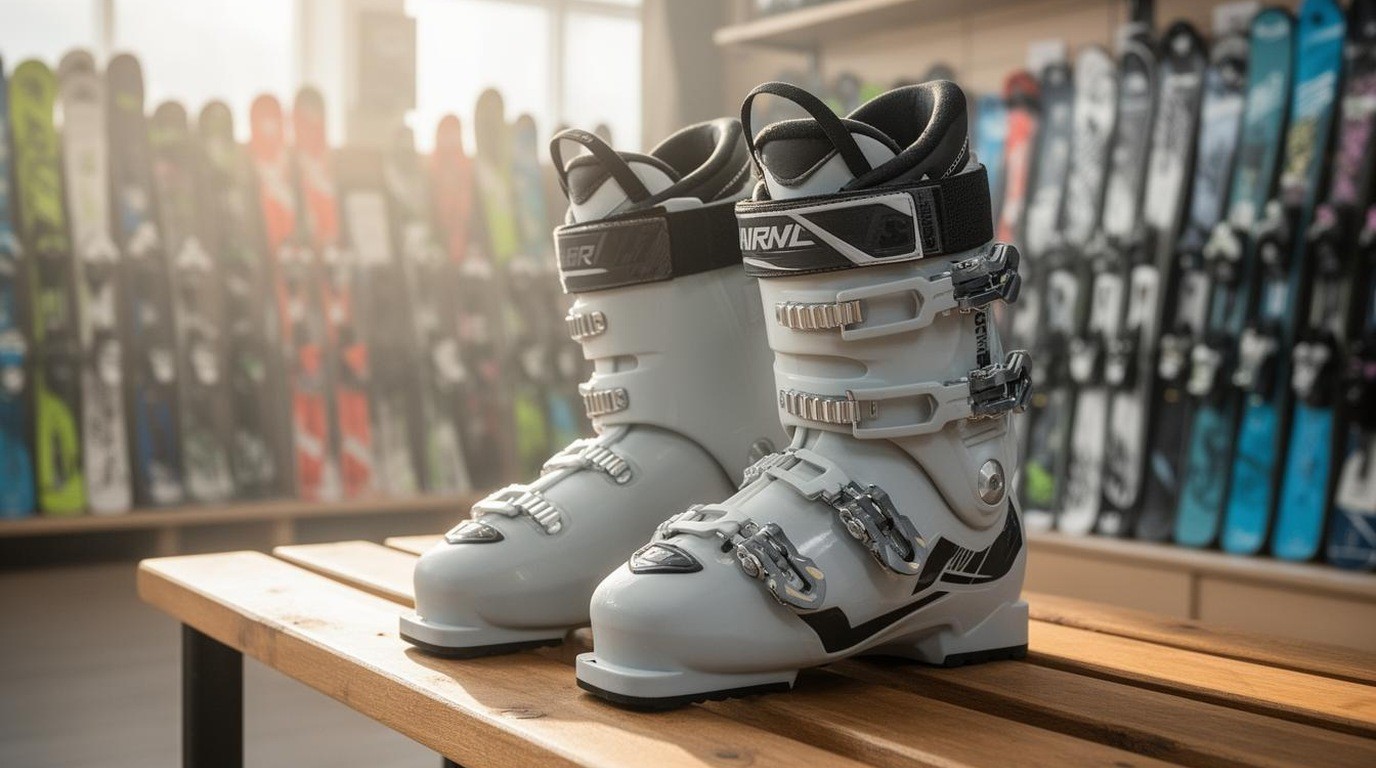
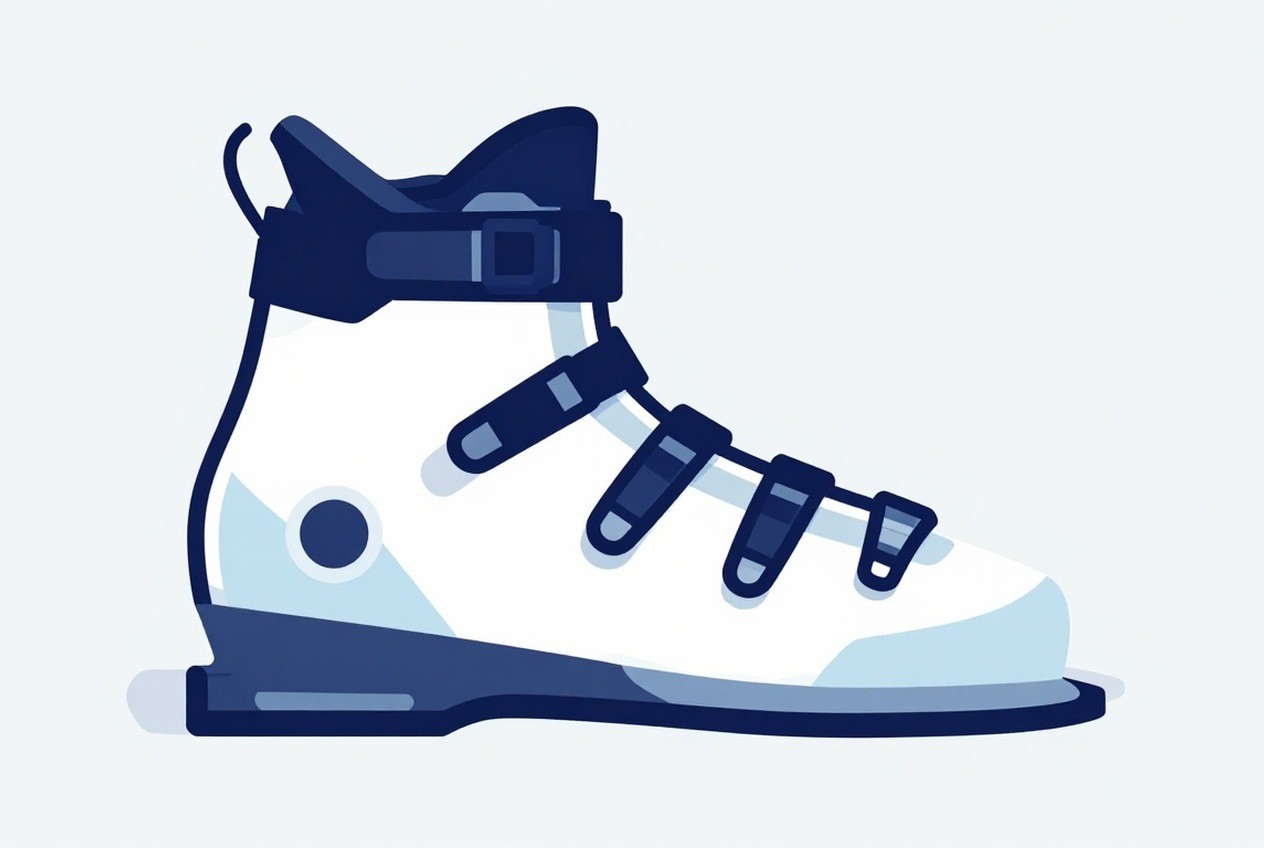
A ski boot has three layers that work together. The outer shell is a rigid plastic that transmits the force from your leg to the ski. Inside it sits a foam liner that is shaped to the foot. The buckles and the cuff hold everything in place and allow the shell to flex in a controlled way. When one of these parts is wrong for your foot, the other two cannot fully compensate.
Think of the shell as the frame of a house, the liner as the insulation and the buckles as the locks. A frame that is too large for the rooms will never feel right, however good the insulation.
What flex means
Flex is the resistance the shell gives when you press your shin forward against the tongue. Manufacturers express it as a number, often in a range where a higher figure means a stiffer boot. The number is not a universal scale. Two brands can use different numbers for similar feel, so compare the flex within a brand before comparing across brands.
Softer boots are easier to move in and more forgiving for beginners and for people who ski at a relaxed pace. Stiffer boots respond faster and give more control at speed, but they demand more strength and tire the leg sooner if the rider is not ready for them. A common mistake is buying the stiffest boot available in the hope that it will make a beginner better. It usually makes them tired instead.
Last width: the fit that matters most
The last is the width and shape of the boot’s interior, and it is usually listed in millimeters at the widest point of the forefoot. A narrow last suits narrow feet, and a wide last suits wide ones. Many boots are sold in more than one last width, and some brands have a reputation for fitting wide or narrow feet.
Width matters because the foot does not compress when you put it in a boot. A boot that is too narrow pinches the sides of the forefoot and causes numbness after a few runs. A boot that is too wide lets the foot slide inside the shell, which causes instability and blisters at the heel and toes.
A fit test that predicts the mountain
A reliable fitting starts with the foot, not the boot size on the box. Bring the socks you will ski in. Stand in the boot with the buckles fastened but not fully tightened, then flex forward until your shin touches the tongue. Your heel should stay firmly in place. If it lifts more than a few millimeters, the boot is probably too large in the heel or the shell is too long for your foot.
Next, check the toes. In a correct fit, the toes should just touch the front of the shell when you stand upright and should not be crushed when you flex. Many fitters recommend a short walk and a few squats in the shop. A boot that feels fine standing still but causes pain when you bend the knees will cause pain on snow.
Heat molding and custom liners
Many boots can be molded to the foot. A technician heats the liner and shell, and the foam takes the shape of your foot as it cools. Some boots also allow adjustments to the shell, such as grinding the plastic around a bony area. These services are done by trained fitters, and they should be explained before they are done. We do not give instructions for modifying boots yourself, since a poor modification can compromise the boot’s support.
Custom footbeds and orthotics can help some riders, but they are a medical matter for many people, so if you have foot pain or a condition, speak to a physician or a qualified podiatrist before adding them.
Questions to ask a fitter
- How does this model’s last compare with my foot’s width, and is there a wider version?
- Will you check the heel lock and toe position with me standing and flexing?
- If the boot needs a liner adjustment, what does it involve and what does it cost?
- What is the return or exchange policy if the fit changes after a few days on snow?
- Which bindings and skis are compatible with this boot’s sole standard?
That last question matters more than many buyers expect. Boot soles follow industry standards, and bindings must match them. A fitter can tell you whether your bindings and boots are compatible. Our guide to helmets and goggles covers the other gear that goes with a binding setup.
Why renting for a first season makes sense
A rental boot will not fit you perfectly, but it lets you learn what kind of boot suits you. A first season spent in rentals gives you time to notice where the boot presses, how much flex you actually use and how your foot changes over a few days of skiing. Many experienced riders say their best purchase came after a season of renting. Rental shops can also tell you what they see most often on their own customers.
Renting also avoids the trap of buying the first boot you try in early December, when prices are attractive and the shop is busy. A boot bought in a hurry is more likely to be the wrong one.
Putting it together
Choose the flex that matches your strength and pace. Choose the last that matches the width of your forefoot. Test the heel lock and the toe position while standing and flexing, and do not accept a boot that hurts in the shop. If you are a beginner, consider renting first. Ask the fitter the questions above before you pay, and keep your receipt until the boot has proved itself on snow.
Once the boots fit, the skis matter more. Our guide to choosing ski length, width and shape is the natural next step, and the early-December sales guide explains how to buy the boots at a fair price.
Mistakes skiers make with boots
- Buying a boot by the shell size on the label alone.
- Choosing a stiff flex before you can hold a stance for a full run.
- Skipping the heel-hold check in the shop.
- Forgetting to try the boots on with the socks you will actually ski in.