Ask ten skiers how long their skis are and nine will give a number, usually taken from a height chart or a friend who ski a similar size. Ask them why that length suits them and most will shrug. Ski length and width are the two measurements that decide how a ski behaves in snow, and they are chosen far too often by habit or by the ski’s color.
This guide explains what length and width actually do, how the shape of a ski changes its behavior, and how to match a pair to the terrain you really ski. It is about the equipment, not about technique. If you want to improve your turns, a qualified instructor is the right place to start, and the ski shop is the right place to learn what a given ski will do for you.
In brief
- Length usually follows height and ability, but terrain and style change the answer.
- Width under the foot matters more for comfort than width at the tip.
- Shape should suit where you ski most, not where you dream of skiing.
In this guide
What length does
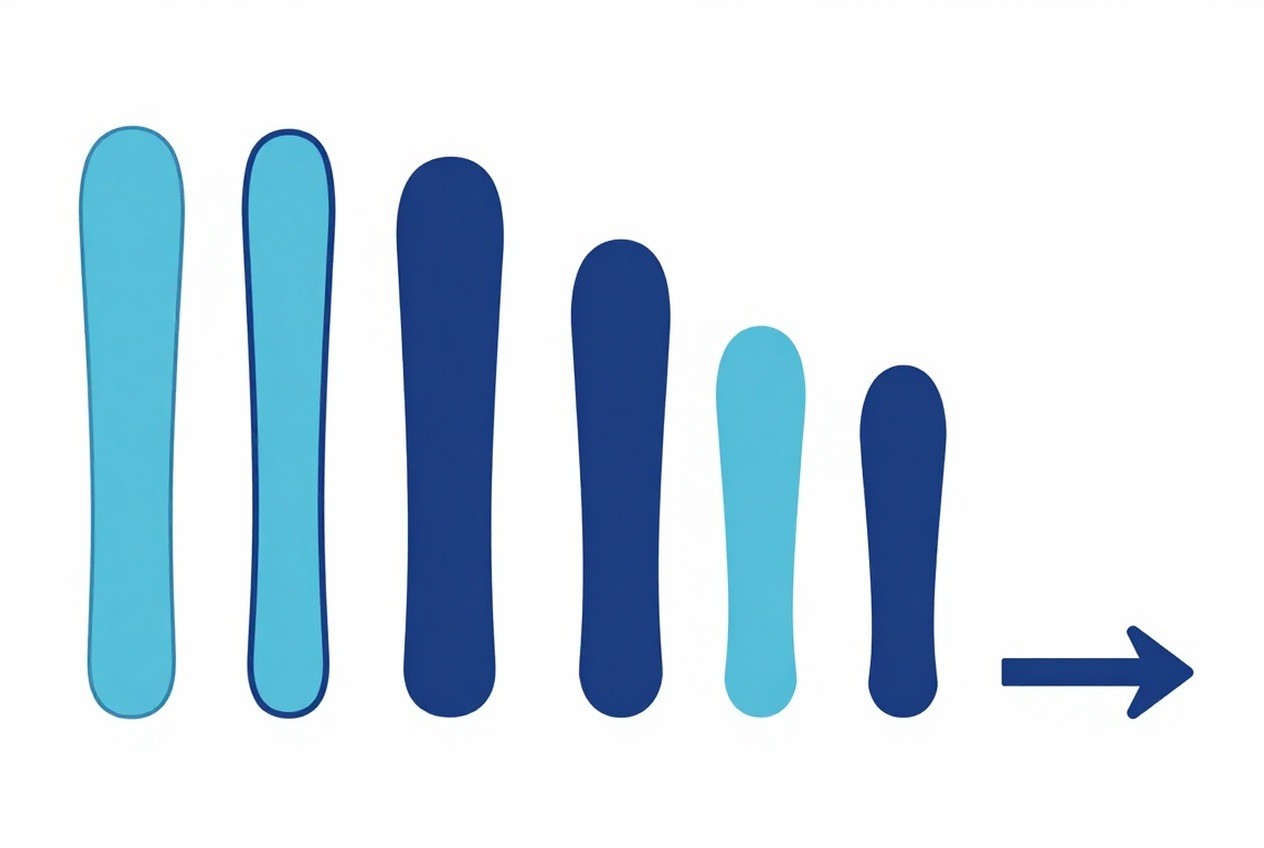
A longer ski is more stable at speed and holds a straight line better on hard snow. It also needs more room to turn and is harder to control in tight trees, moguls and short turns. A shorter ski turns quickly and feels playful in soft snow, but it can feel unstable at high speed and on hard surfaces.
Length is usually expressed in centimeters and relates to the rider’s height and weight, the skier’s ability and the terrain. Manufacturers publish sizing charts, and those charts are a good starting point. They are not the final answer. Two riders of the same height can want different lengths depending on how fast they ski, how aggressive they are and where they ski most.
What width does
Width is measured at the waist, the narrowest part of the ski under the binding. A narrow ski is quick on groomed runs and carves well on hard snow. A wide ski floats better in powder because it spreads the rider’s weight over more snow, and it also tends to be more stable in variable conditions.
Width is the number that most changes how a ski feels in different snow. A ski that is perfect for groomed corduroy can feel unpredictable in deep powder, and a powder ski can feel sluggish on a hard icy run. Many skiers who ski a mix of conditions choose a middle width that handles most snow reasonably well.
Shape: sidecut, rocker and camber
Modern skis have a shape that is more complicated than a straight board. The sidecut is the curve of the edges that determines how tightly the ski turns. A deeper sidecut turns tighter and feels quicker, while a shallower one turns more gradually and holds a longer radius.
Rocker is the upward curve at the tip and tail, which helps the ski float in soft snow and reduces the chance of catching an edge. Camber is the arch of the ski when it sits flat on the snow, which gives grip and power on hard surfaces. Many skis combine rocker and camber in different proportions. A rockered ski is easier in soft snow and more forgiving; a cambered ski grips better on firm snow and rewards precise technique.
Matching a ski to your terrain
Think about where you ski most of the time, not where you would like to ski once a year.
- Groomed runs and hard snow. A narrower ski with camber and a moderate sidecut suits most of the work.
- Mixed resort skiing with some powder days. A medium width with some rocker will handle most conditions without feeling tiring.
- Deep powder and backcountry touring. A wider ski with more rocker gives float and forgiveness, though it is heavier and less precise on hard snow.
- Trees and moguls. A shorter, softer ski turns quickly and is easier to pivot.
If you ski mainly one kind of terrain, choose the ski for that terrain. If you ski everything, pick a middle option and accept some compromise.
A simple sizing check
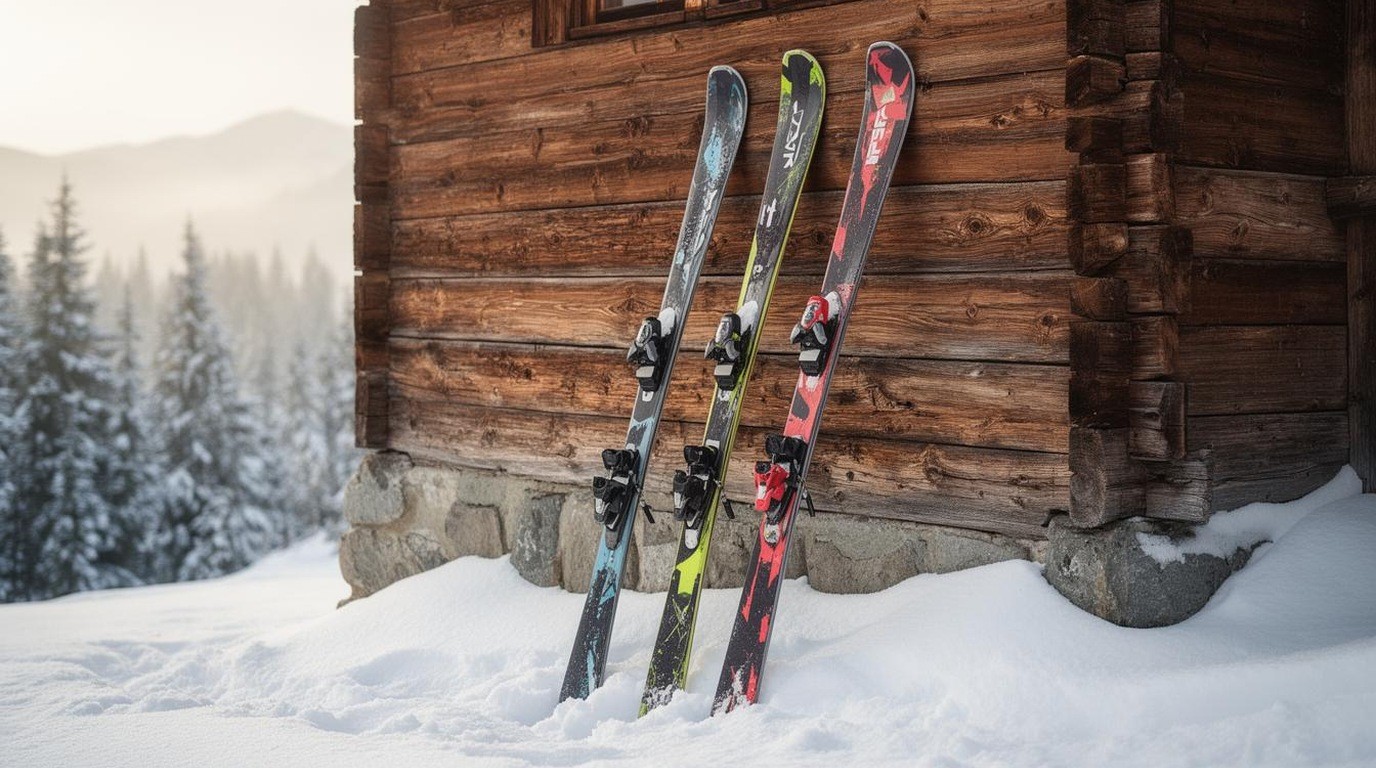
Stand the ski on its tail beside you and compare it with a reference point, such as your wrist or chin, as many shops do. This is a rough check, and it should be combined with the manufacturer’s chart and with your ability. Ask the shop to recommend a length, explain the reasons and compare two or three options if you can.
Bindings also matter. A ski’s binding must be mounted at the position the manufacturer specifies, and a technician should check the mount. We do not give instructions for mounting or adjusting bindings, since release settings are a safety matter. Ask a qualified technician to set them.
Common mistakes
- Choosing the longest ski because it looks fast in the shop.
- Buying a powder ski for a resort that rarely gets deep snow.
- Ignoring the weight of the ski, which affects how tired you get over a day.
- Assuming a ski from last season is the same as this year’s version.
- Buying skis before boots, which can leave you with the wrong flex and a mismatch that is hard to fix. See our guide to ski boots that fit for the order to follow.
When to rent and when to buy
Renting is a good way to test a few lengths and widths before committing. Many rental shops will let you try a different length if you ask, and some offer demo skis. Buy once you know which terrain you ski, how fast you go and what length you have been comfortable on. A pair that suits you for five seasons is worth more than a discount on a pair that does not.
If you are deciding in early December, be aware that sales start early and inventory changes quickly. Our guide to early-December ski sales explains how to check model years and return terms before you buy.
The short version
Length controls stability and turning radius, width controls float and grip in varied snow, and shape decides how the ski feels from edge to edge. Match the ski to the terrain you ski most, check the sizing chart against your ability and let a shop recommend and compare options. Set bindings with a technician, and buy boots first.
Questions about length and width
Does a longer ski always mean more stability?
Longer skis generally track more steadily at speed, but they turn more slowly and feel awkward in tight trees. Match the length to how you ski most often.
Is a wide ski only for powder?
A wider waist floats better in deep snow, but on firm groomers it can feel sluggish. Many skiers who ride mixed snow prefer a middle width.
How do I check the weight range?
Makers publish weight ranges. Use them as a starting point, then ask a shop to check the flex for your style.